How Many Pages Is 2,000 Words? Charts for Essays & Reports
Your assignment says 2,000 words, and your brain wants a page number. The honest answer is that it depends on spacing, but the standard answer is simple: about 4 pages single-spaced, or about 8 pages double-spaced.
Quick answer
2,000 words is about 4 pages single-spaced or about 8 pages double-spaced, using 12-point Times New Roman or Arial with 1-inch margins. A single-spaced page holds roughly 500 words, and a double-spaced page holds roughly 250 words. Change the font, the font size, the margins, or the spacing, and the page count moves with them, so always check your assignment format before you trust any chart.
Pages by spacing
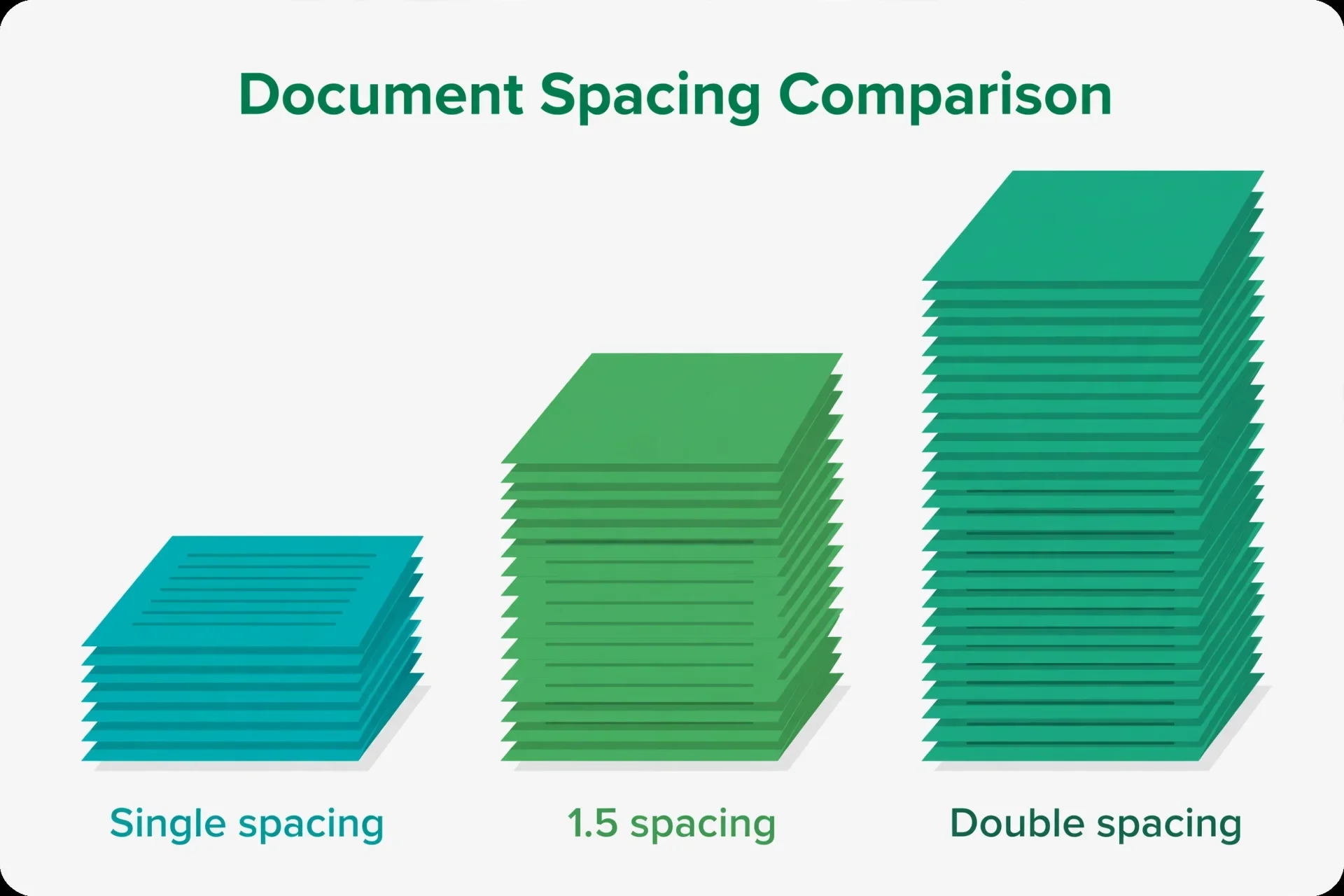
Spacing is the biggest lever on page count. It does not change a single word of your text, yet it can double the length of your document. That is why teachers and editors state spacing in the assignment, and why a chart without a spacing column is useless.
| Spacing | Words per page (approx.) | 2,000 words |
|---|---|---|
| Single-spaced | 500 | About 4 pages |
| 1.5 spacing | About 350 | About 6 pages |
| Double-spaced | 250 | About 8 pages |
These figures assume continuous body text. Headings, lists, block quotes, tables, and images all eat page space without adding many words, so a real essay with several headings often runs a little longer than the chart says. The reverse is also true: long unbroken paragraphs pack slightly more words per page than a document broken into many short sections.
If your assignment gives a page count instead of a word count, work backwards with the same math. Eight double-spaced pages means roughly 2,000 words, and four single-spaced pages means the same. Then aim a little over, not under, because trimming is easier than stretching a short draft at the last minute.
What changes the page count
Four settings decide how many words fit on a page. Learn them once, and you will never be surprised by a page count again.
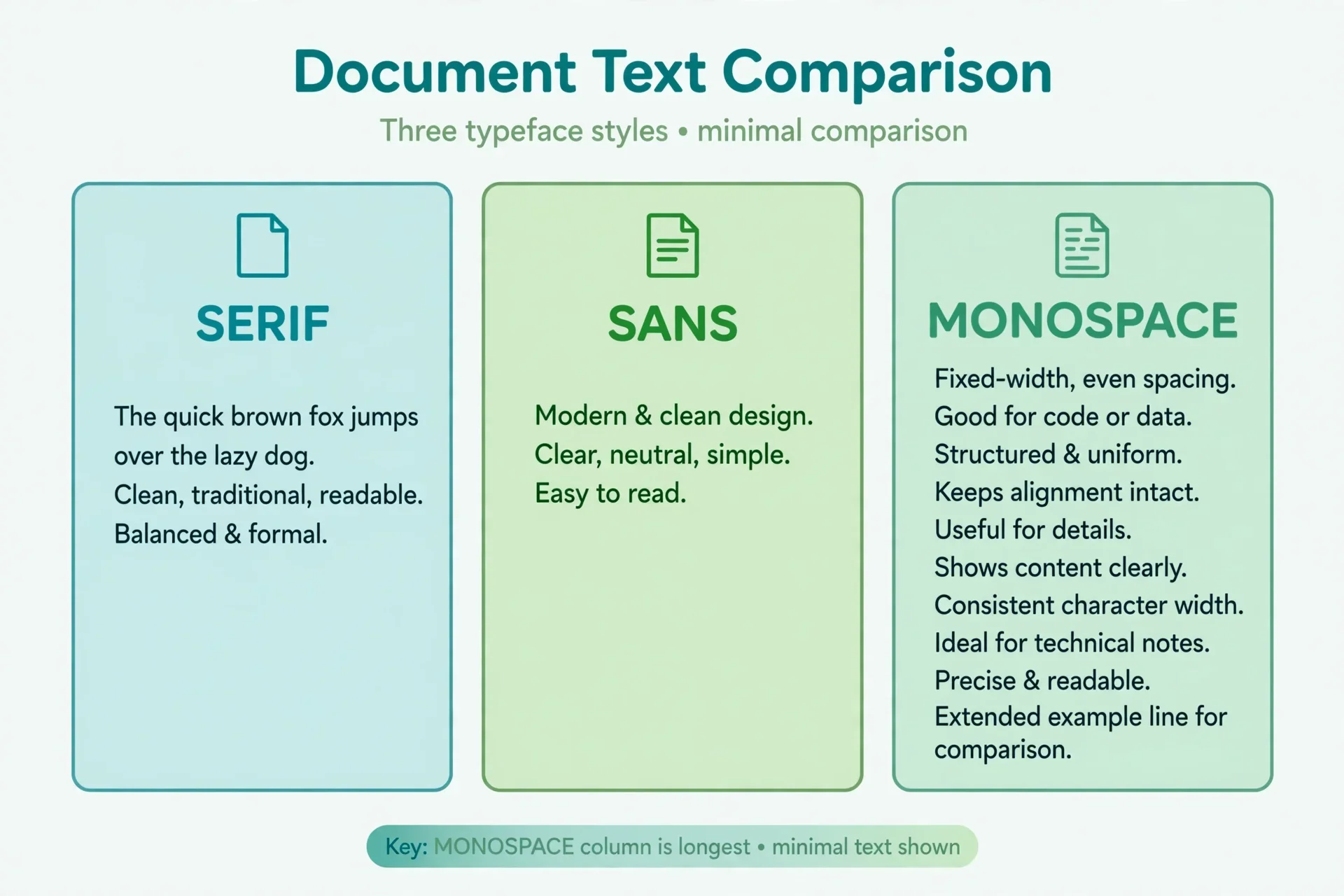
Font choice. Times New Roman and Arial at 12 points give the standard counts above. Calibri runs a touch narrower, so the same text may land just under 8 double-spaced pages. Courier New is the outlier: every character takes the same width, so it fits far fewer words per line, and a 2,000-word essay in Courier New can stretch past 10 double-spaced pages. That trick used to fool page counts, and most instructors now name an approved font for exactly that reason.
Font size. Dropping from 12 points to 11 points packs noticeably more words per page, and 10 points packs more again. Going the other way, 14-point text for a presentation handout or a large-print draft can push 2,000 words well past 10 double-spaced pages. If your format does not name a size, 12 points is the safe default.
Margins. One-inch margins on all sides are the academic standard. Wider margins shrink the printable area, so fewer words fit per page. A 1.25-inch margin setup, still used in some older department styles, drops a double-spaced page from about 250 words toward about 220. Narrow margins do the opposite, which is why a business report with half-inch margins looks much shorter than the same text in an essay format.
Paragraph breaks and headings. Every heading, subheading, list, and blank line between paragraphs costs lines. A document with a heading every few paragraphs and generous paragraph spacing will run longer than the chart predicts. None of this is cheating or padding. It is normal document structure, and it is the main reason two students with the same word count hand in different page counts.
2,000 words by document type
The same 2,000 words look different in different documents, because each type brings its own format and its own extras.
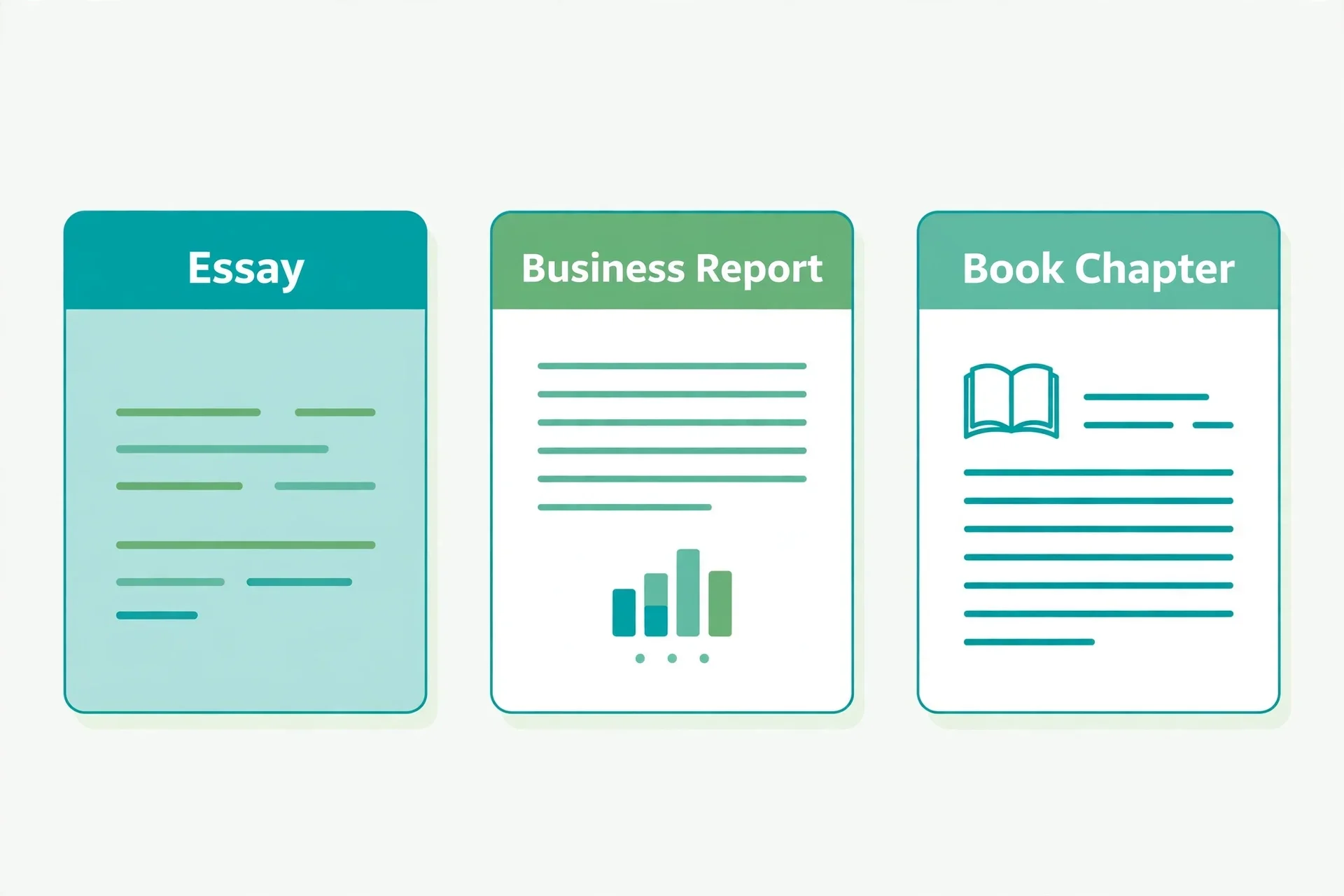
College essay. This is the classic case: 12-point Times New Roman, double-spaced, 1-inch margins, MLA or APA style. Expect about 8 pages of body text, plus a title page and a references page that do not count toward the body total in most courses. Check whether your course counts the references page, because that single rule changes the target.
Business report. Reports usually run single-spaced with headings, tables, and charts. Body text of 2,000 words lands near 4 pages, but tables and charts push the file longer fast. A report with three tables and two charts can easily reach 7 or 8 pages total while the word count stays at 2,000. Report the word count and the page count separately when you hand it in, so nobody mistakes chart pages for missing text.
Blog post or online article. Web writing uses shorter paragraphs, more headings, and images, so 2,000 words on screen feels longer than 2,000 words in a Word file. In print terms it is still about 4 single-spaced pages, but readers scroll past images and subheadings that add screen length without adding words. For a blog, word count matters more than page count, because nobody prints the post.
Book chapter or manuscript. Manuscripts often use double spacing for editing, so 2,000 words is about 8 manuscript pages. Published books are a different story: a typical paperback page holds roughly 250 to 300 words, so 2,000 words is about 7 to 8 printed book pages, depending on trim size and typeface. Do not use manuscript pages to estimate a printed book, or the reverse.
Handwritten 2,000 words
Handwriting is harder to predict, because hand size varies so much. As a rough guide, average handwriting fills about 250 words per page on lined paper, which puts 2,000 words near 8 pages, much like a double-spaced typed essay. Large handwriting drops to about 200 words per page, pushing the same text toward 10 pages. Small, tight handwriting can reach 300 words per page, bringing it closer to 7 pages.
Ruled paper matters too. Wide-ruled paper gives fewer lines per page than college-ruled paper, so the same handwriting fills more pages on wide-ruled sheets. If a handwritten assignment states a page count, write one full page first, count its words, and multiply. That single test page beats every chart, because it measures your hand, your pen, and your paper.
For exams, do not plan on handwriting speed matching typing speed. Most people write far fewer words by hand in the same time, so a 2,000-word handwritten answer is a long exam, not a quick one.
Check your own page count
Charts are planning tools. Your own document is the truth. Check it in under a minute.
- In Word, look at the status bar. The bottom left shows the word count and the page count as you type. Open Review, then Word Count, for the full breakdown. Our guide to word count in Microsoft Word shows every route, including the shortcut.
- In Google Docs, use Tools, then Word count. Docs shows words and pages in one small box. Our Google Docs word count guide covers what Docs leaves out.
- Cross-check with a counter. Paste your text into the free Word Counter on this site and read words, sentences, paragraphs, and reading time live as you type. If Word and the counter disagree, check for footnotes, text boxes, or selected text first, since those are the usual causes.
When you check, confirm the format first: font, size, spacing, and margins. A count taken in the wrong format answers a different question from the one your assignment asked. Fix the format, then read the number.
Common mistakes and fixes
Trusting a chart without checking the format. A chart that assumes double spacing is wrong for a single-spaced report. Read the spacing row first, then the page number.
Counting the title and references pages as body pages. Many courses exclude them. Ask, or read the assignment sheet, before you cut good paragraphs to hit a page target that never included those pages.
Padding with wide spacing or a big font to reach a page count. Readers notice, and many formats forbid it. Add a real section, an example, or a counterpoint instead. It reads better and it survives a format check.
Treating pages and words as the same requirement. They measure different things. A 2,000-word limit with an 8-page format is one requirement, not two, and meeting the page count in the wrong format does not meet the word count.
Forgetting images and tables. A chart page counts as a page but adds few words. If your document has several figures, the page count will run ahead of the word count, and that is normal.
Frequently asked questions
How many pages is 2,000 words double-spaced?
About 8 pages, using 12-point Times New Roman or Arial with 1-inch margins. A double-spaced page holds roughly 250 words, so 2,000 divided by 250 gives 8. Headings and lists can push the real total a little higher.
How many pages is 2,000 words single-spaced?
About 4 pages, using 12-point Times New Roman or Arial with 1-inch margins. A single-spaced page holds roughly 500 words, so 2,000 divided by 500 gives 4. Business reports with tables and charts run longer in total pages.
How many pages is 2,000 words in APA format?
About 8 pages of body text, since APA uses 12-point Times New Roman, double spacing, and 1-inch margins. The title page and references page sit outside the body count in most courses, so confirm whether your course counts them.
How many paragraphs is 2,000 words?
Roughly 10 to 13 paragraphs, if a typical paragraph runs 150 to 200 words. Short web-style paragraphs push the count higher, and long academic paragraphs push it lower. Paragraph count is a planning aid, not a rule.
How long does it take to write 2,000 words?
Planning and drafting a 2,000-word essay usually takes several hours spread over more than one sitting, including research and editing. Typing speed alone is a poor guide, since thinking, checking sources, and revising take most of the time.
Is 2,000 words a lot for an essay?
It is a solid mid-length essay: long enough for a clear argument with evidence, short enough to plan in one outline. Most undergraduate essays in this range have an introduction, three or four body sections, and a closing section.
Try the free counter
Start with the chart: 4 pages single-spaced, 8 pages double-spaced, 6 pages at 1.5 spacing. Then open your own document, confirm the font, size, spacing, and margins match your assignment, and read the real number. The chart gets you close, and your document gets you exact.
When you need the word count itself, open the free Word Counter, paste your text, and read words, sentences, paragraphs, and reading time as you type, with no signup. Use it to check a draft before you format it, and again after, since formatting never changes the words but always changes the pages. Then turn the total into pages with the Words to Pages Calculator.
How we tested this: we checked the page-count figures against published words-to-pages guides found during research, including Grammarly's page-count guide, which gives the same 4-page single-spaced and 8-page double-spaced figures for 12-point Times New Roman or Arial, and we read the Word Counter tool page on this site to confirm it shows words, sentences, paragraphs, and reading time live as you type. Figures here are planning estimates for standard formats, not exact counts for any one document.
Privacy note: the Word Counter on this site needs no account and no signup. The tool page states that your text is processed in your browser and never uploaded or stored, so a draft essay is not sent to a server to be counted.
Last updated: October 31, 2026