How Many Pages Is 500 Words? Charts for Essays
Your assignment says 500 words, and your brain wants a page number. The standard answer is short: about 1 page single-spaced, or about 2 pages double-spaced.
Quick answer
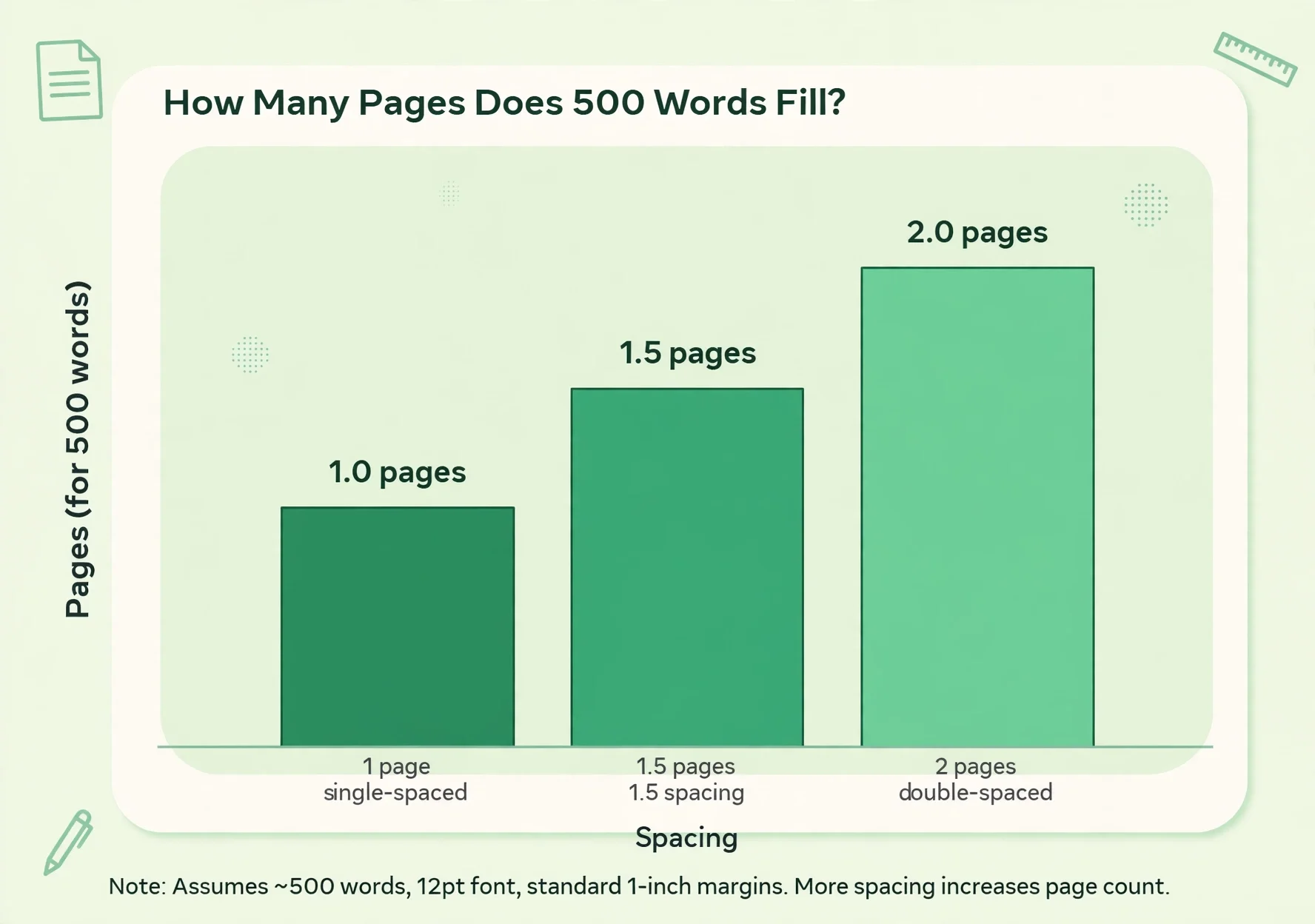
500 words is about 1 page single-spaced or about 2 pages double-spaced, using 12-point Times New Roman or Arial with 1-inch margins. A single-spaced page holds roughly 500 words, and a double-spaced page holds roughly 250 words. At 1.5 spacing, the same text fills about 1.5 pages. Change the font, the font size, the margins, or the spacing, and the page count moves with them, so check your assignment format before you trust any chart.
Pages by spacing
Spacing is the biggest lever on page count. It does not change a single word of your text, yet it can double the length of your document. That is why teachers and editors state spacing in the assignment, and why a chart without a spacing column is useless.
| Spacing | Words per page (approx.) | 500 words |
|---|---|---|
| Single-spaced | 500 | About 1 page |
| 1.5 spacing | About 333 | About 1.5 pages |
| Double-spaced | 250 | About 2 pages |
These figures assume continuous body text. Headings, lists, block quotes, and blank lines between paragraphs all eat page space without adding many words, so a real essay with several headings often runs a little longer than the chart says.
If your assignment gives a page count instead of a word count, work backwards with the same math. Two double-spaced pages means roughly 500 words, and one single-spaced page means the same. Aim a little over, not under, because trimming is easier than stretching a short draft at the last minute.
How many paragraphs is 500 words?
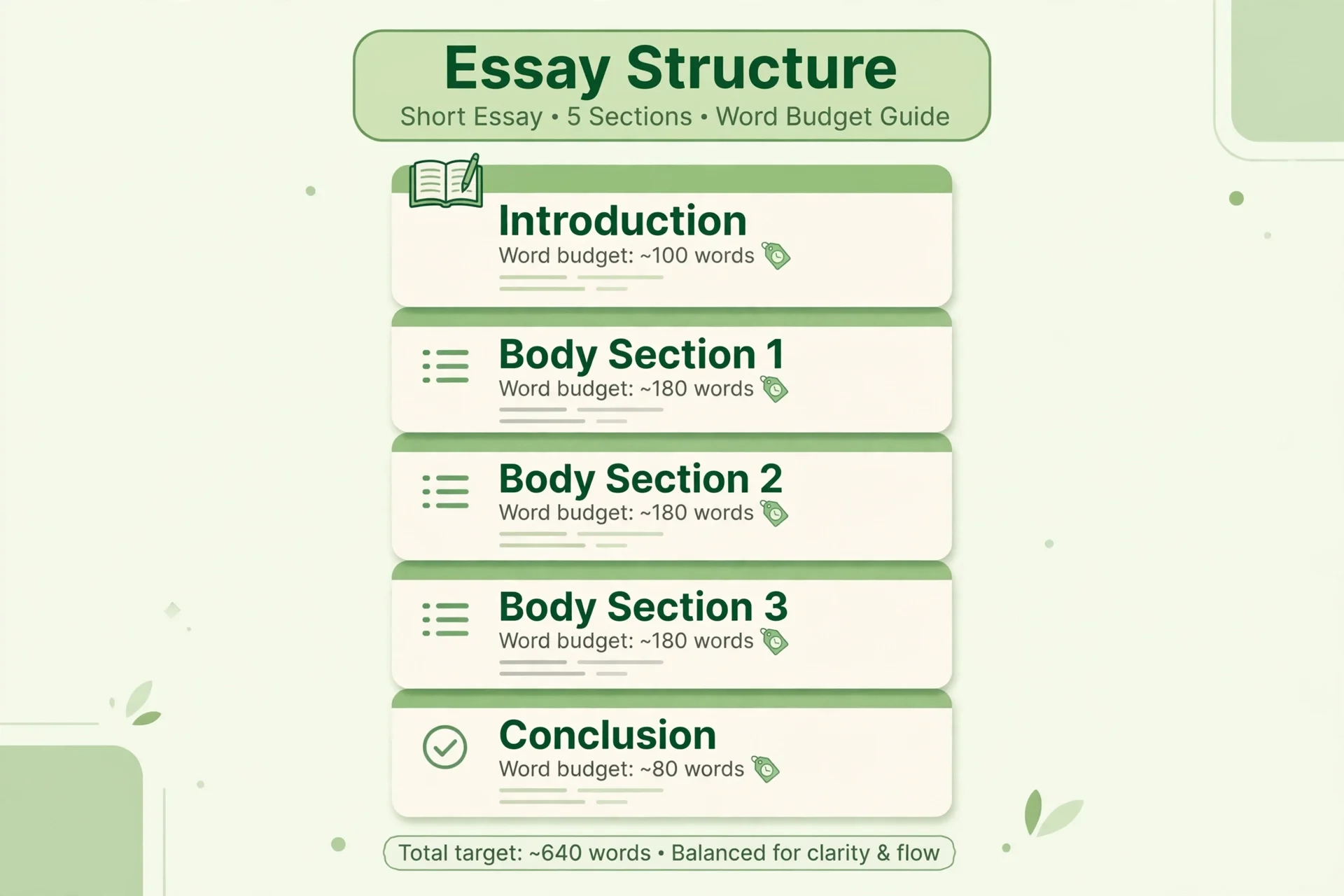
For a 500-word essay, plan on 4 to 5 paragraphs: an introduction, two or three body paragraphs, and a closing paragraph. If your paragraphs run long, in the 150 to 200 word range common in academic writing, you may land on 3 paragraphs instead. Short web-style paragraphs push the count the other way, toward 6 or 7. Paragraph count is a planning aid, not a rule.
A word budget keeps a short essay on track. It stops the introduction from eating half the essay and leaves room for the ending:
| Section | Word budget (approx.) | Job of the section |
|---|---|---|
| Introduction | 75 to 100 | State the point and the plan |
| Body paragraph 1 | 100 to 125 | First reason, with one example |
| Body paragraph 2 | 100 to 125 | Second reason, with one example |
| Body paragraph 3 | 100 to 125 | Third reason, or a counterpoint |
| Closing paragraph | 50 to 75 | Restate the point, briefly |
Aim near the middle of each range and you land close to 500 words without counting every sentence as you write. If you finish a section well over its budget, tighten it before moving on, because at 500 words there is no room to carry a bloated paragraph and hope the ending fixes it.
One more thing about short essays: every sentence has to earn its place. A 500-word essay has no space for a long warm-up. If a sentence does not advance the argument, cut it.
What changes the page count
Four settings decide how many words fit on a page.
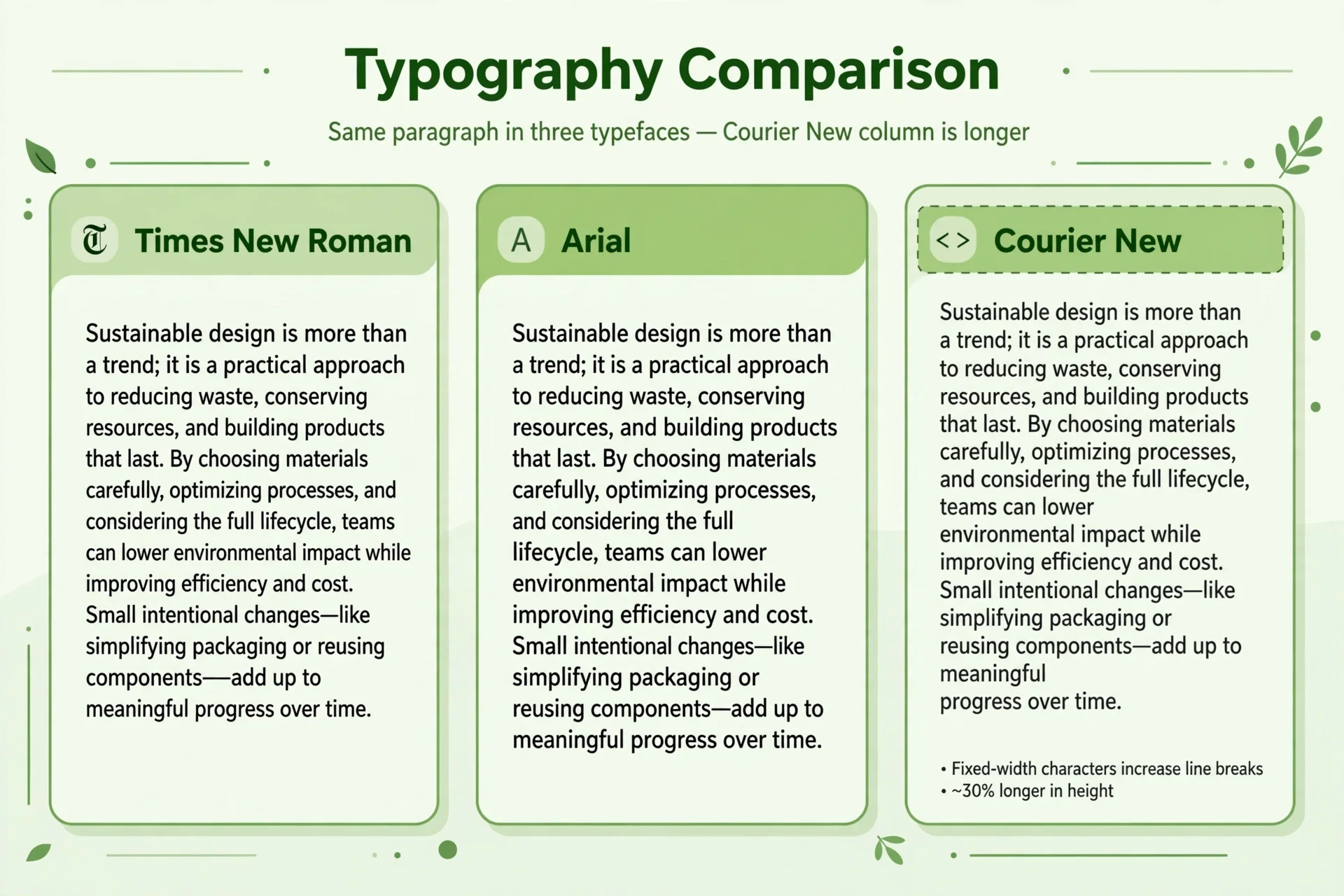
Font choice. Times New Roman and Arial at 12 points give the standard counts above. Calibri runs a touch narrower, so the same text may land just under 2 double-spaced pages. Courier New is the outlier: every character takes the same width, so a 500-word essay in Courier New stretches to about 1.75 pages single-spaced and about 3.5 pages double-spaced. Most instructors now name an approved font for exactly that reason.
Font size. Dropping from 12 points to 11 points packs noticeably more words per page, and 10 points packs more again. At 10 points, 500 words fills roughly three quarters of a single-spaced page and about 1.67 pages double-spaced. If your format does not name a size, 12 points is the safe default.
Margins. One-inch margins on all sides are the academic standard. Wider margins shrink the printable area, so fewer words fit per page. A 1.25-inch margin setup, still used in some older department styles, drops a double-spaced page from about 250 words toward about 220.
Paragraph breaks and headings. Every heading, subheading, list, and blank line between paragraphs costs lines. A document with a heading every few paragraphs will run longer than the chart predicts. This is normal document structure, and it is the main reason two students with the same word count hand in different page counts.
500 words by document type
The same 500 words look different in different documents, because each type brings its own format and its own extras.
College essay, MLA style. This is the classic case: 12-point Times New Roman, double-spaced, 1-inch margins, about 2 pages of body text. MLA has no separate title page: a heading block with your name, instructor, course, and date opens page one, and the Works Cited list goes on its own page at the end. In most courses neither counts toward the body total, so confirm that rule before you cut good paragraphs to hit a page target.
College essay, APA style. APA student papers use the same 12-point type, double spacing, and 1-inch margins, so the body text is again about 2 pages. The difference is the extras: an APA student paper opens with a title page and closes with a references page, both outside the body count in most courses.
Application essay or personal statement. These are often submitted single-spaced through an online form, so 500 words is about 1 page, and the form usually enforces a word limit or a character limit rather than a page limit. Watch the limit type: our guide to word count vs character count explains which one applies to you.
Business memo or short report. Memos run single-spaced with short paragraphs and headings, so 500 words lands near 1 page of body text. Any table or chart pushes the file longer fast.
Blog post or online article. Web writing uses shorter paragraphs, more headings, and images, so 500 words on screen feels longer than 500 words in a Word file. In print terms it is still about 1 single-spaced page, but for a blog, word count matters more than page count.
Handwritten 500 words
Handwriting is harder to predict, because hand size varies so much. As a rough guide, average handwriting fills about 250 words per page on lined paper, which puts 500 words near 2 pages, much like a double-spaced typed essay. Large handwriting drops to about 200 words per page, pushing the same text toward 2.5 pages. Small, tight handwriting can reach 300 words per page, bringing it under 2 pages.
Check your own page count
Charts are planning tools. Your own document is the truth.
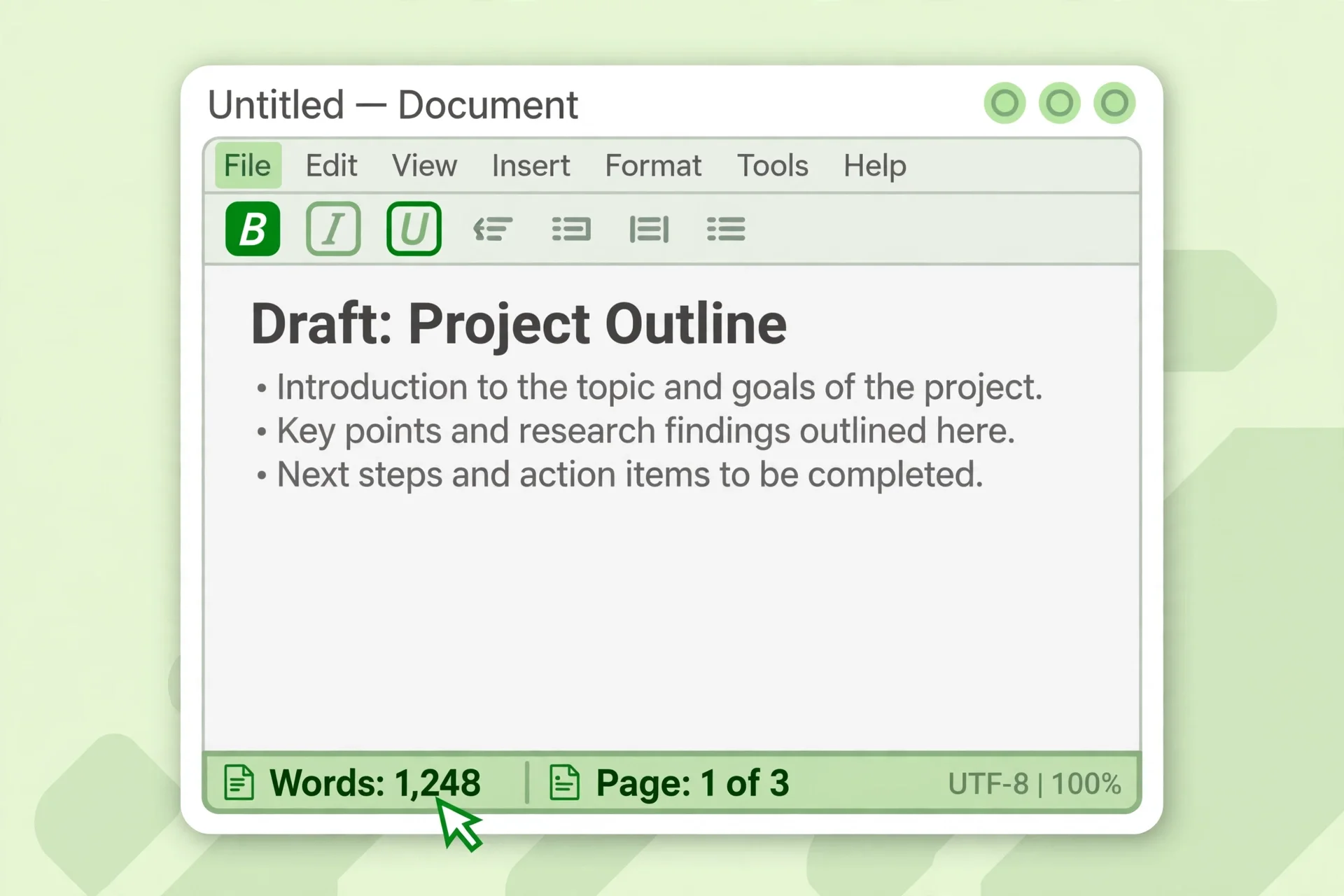
- In Word, look at the status bar. The bottom left shows the word count and the page count as you type. Open Review, then Word Count, for the full breakdown. Our guide to word count in Microsoft Word shows every route, including the shortcut.
- In Google Docs, use Tools, then Word count. Docs shows words and pages in one small box. Our Google Docs word count guide covers what Docs leaves out.
- Cross-check with a counter. Paste your text into the free Word Counter on this site and read words, sentences, paragraphs, and reading time live as you type. If Word and the counter disagree, check for footnotes, text boxes, or selected text first.
Common mistakes and fixes
Trusting a chart without checking the format. A chart that assumes double spacing is wrong for a single-spaced application essay. Read the spacing row first.
Counting the title and references pages as body pages. Many courses exclude them. Read the assignment sheet before you cut good paragraphs to hit a page target that never included those pages.
Padding with wide spacing or a big font to reach a page count. Readers notice, and many formats forbid it. Add a real example, a second reason, or a counterpoint instead.
Treating pages and words as the same requirement. They measure different things. Meeting the page count in the wrong format does not meet the word count.
Guessing instead of counting. At 500 words, one long paragraph can be 100 words over budget without looking long. Paste the text into a counter before you submit, not after.
Frequently asked questions
How many pages is 500 words double-spaced?
About 2 pages, using 12-point Times New Roman or Arial with 1-inch margins. A double-spaced page holds roughly 250 words, so 500 divided by 250 gives 2. Headings, lists, and a title block can push the real total a little higher.
How many pages is 500 words single-spaced?
About 1 page, using 12-point Times New Roman or Arial with 1-inch margins. A single-spaced page holds roughly 500 words, so 500 words fills one full page. Business memos with tables and headings run a little longer in total pages.
How many pages is 500 words handwritten?
About 2 pages on lined paper with average handwriting, which fills roughly 250 words per page. Large handwriting pushes the same text toward 2.5 pages, and small, tight handwriting brings it under 2 pages. Write one test page and count it for your own exact rate.
How many paragraphs is 500 words?
Usually 4 to 5 paragraphs: an introduction, two or three body paragraphs, and a closing paragraph. Long academic paragraphs of 150 to 200 words bring the count down to 3, and short web-style paragraphs push it up toward 7. Paragraph count is a planning aid, not a rule.
How many pages is 500 words in MLA format?
About 2 pages of body text, since MLA uses 12-point type, double spacing, and 1-inch margins. MLA has no separate title page, and the Works Cited list goes on its own page at the end. In most courses neither counts toward the body total, so confirm that rule first.
How long does it take to write 500 words?
Typing 500 words takes only a few minutes, but planning, drafting, and editing a short essay usually takes much longer, often an hour or more of focused work. Thinking and revising take most of the time, not the typing itself.
Try the free counter
Start with the chart: 1 page single-spaced, 2 pages double-spaced, 1.5 pages at 1.5 spacing. Then open your own document, confirm the format matches, and read the real number.
When you need the word count itself, open the free Word Counter, paste your text, and read words, sentences, paragraphs, and reading time as you type, with no signup. Check a draft before you format it, and again after, since formatting never changes the words but always changes the pages. Then turn the total into pages with the Words to Pages Calculator.
How we tested this: we checked the page-count figures against published words-to-pages guides found during research, including the TextLimits words-to-pages calculator, which uses the same 500-words-per-single-spaced-page and 250-words-per-double-spaced-page baseline, and the MLA formatting rules in the LibreTexts MLA document formatting guide (12-point type, 1-inch margins, double spacing throughout). We also read the Word Counter tool page on this site to confirm it shows words, sentences, paragraphs, and reading time live as you type. Figures here are planning estimates for standard formats, not exact counts for any one document.
Privacy note: the Word Counter on this site needs no account and no signup. The tool page states that your text is processed in your browser and never uploaded or stored.
Last updated: November 9, 2026